Tuscan Terroir & The Heritage Olive Press
Notes on an October harvest in the Val d'Orcia, where emerald liquid meets hot hearth sourdough.
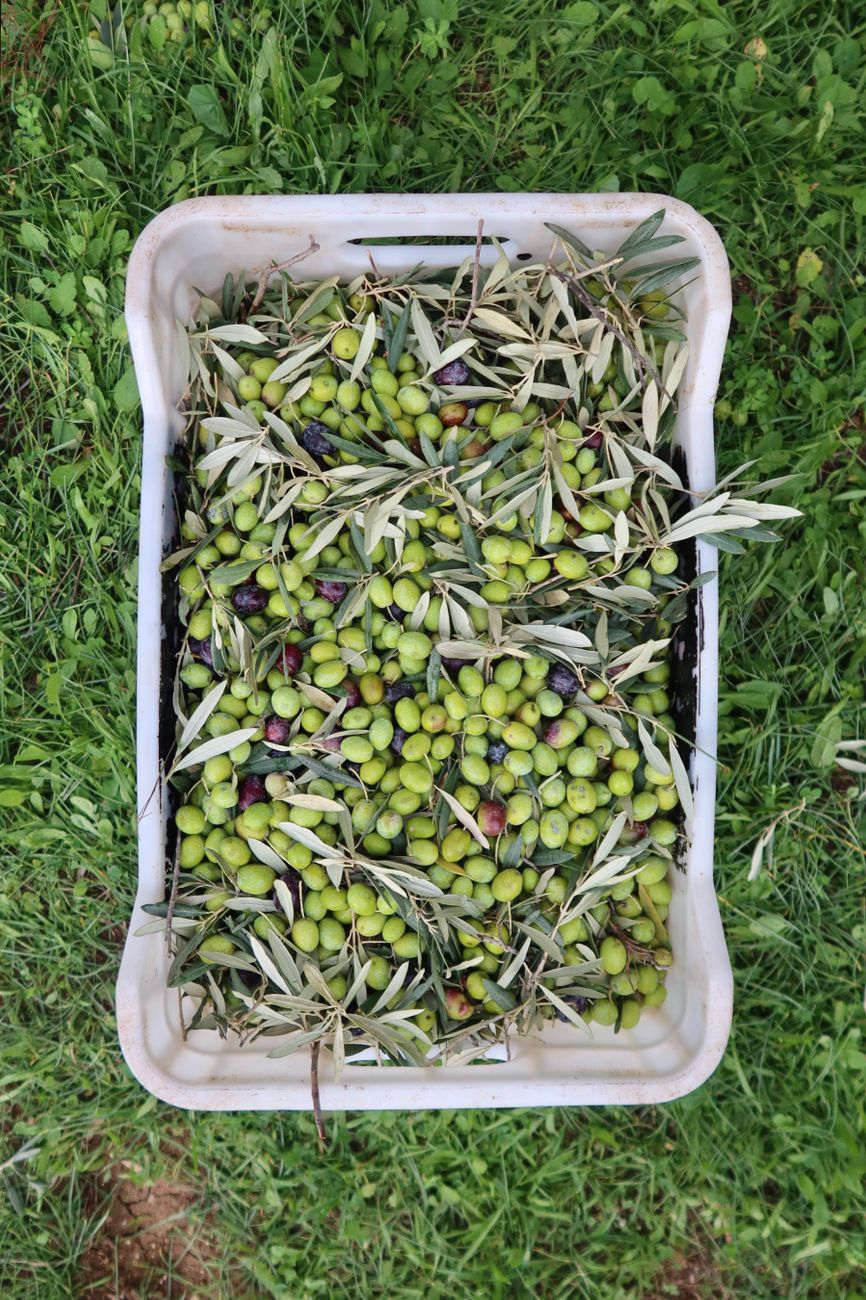
Table of Contents
1. The Early Morning Nets
Before the October mist lifts from the cypress alleyways, the nets are already unrolled across the red clay. In this corner of Tuscany, the harvest is never automated by industrial shaking tractors. Handheld rakes made of woven wood dislodge the ripening Frantoio, Leccino, and Moraiolo drupes, letting them tumble gently onto heavy woven tarpaulins without bruising the skin.
Timing is everything: waiting two weeks longer would yield more quantity, but harvest today locks in an intense, peppery polyphenol profile that prickles the back of the throat. It is the signature mark of supreme extra virgin olive oil—sharp, green, tasting of cut grass and wild artichoke leaves.
2. Inside the Stone Frantoio
Within four hours of coming off the bough, the wooden crates are loaded into the ancient mill outside San Quirico d'Orcia. While centuries ago donkeys turned the colossal granite millstones, the modern artisan press uses cold centrifugal extraction under sealed nitrogen atmospheres to prevent oxidation.
"You cannot lie about olive oil. Soil, rainfall, elevation, and the exact hour of pressing are recorded indelibly upon your tongue."
When the first stream of oil pours from the spout, it is not the golden liquid seen in supermarket bottles. It is an opaque, electric chartreuse, glistening under low hanging filament bulbs, giving off an intoxicating aroma of fresh foliage and soil.
3. The Ritual of Fettunta
In Tuscany, new oil is never introduced with complex sauces. The quintessential welcome is fettunta: thick slices of unsalted sourdough grilled over seasoned oak coals until blackened around the perimeter, rubbed vigorously with a single clove of raw purple garlic, and inundated with oil until the crumb can hold no more.
Paired with a glass of un-oaked Sangiovese from a neighbor's estate, this meal demonstrates how authentic gastronomy requires no ornament—only perfect raw materials and unhurried company around an open fireplace.
4. Soils and Climate Resilience
As summer temperatures shift across southern Europe, traditional olive farmers are returning to polyculture farming. Rather than maintaining sterile bare earth between tree rows, cover crops of clover, wild mustard, and fava beans are planted to retain vital moisture, fix nitrogen naturally, and protect the fragile topsoil from sudden Mediterranean rainstorms.